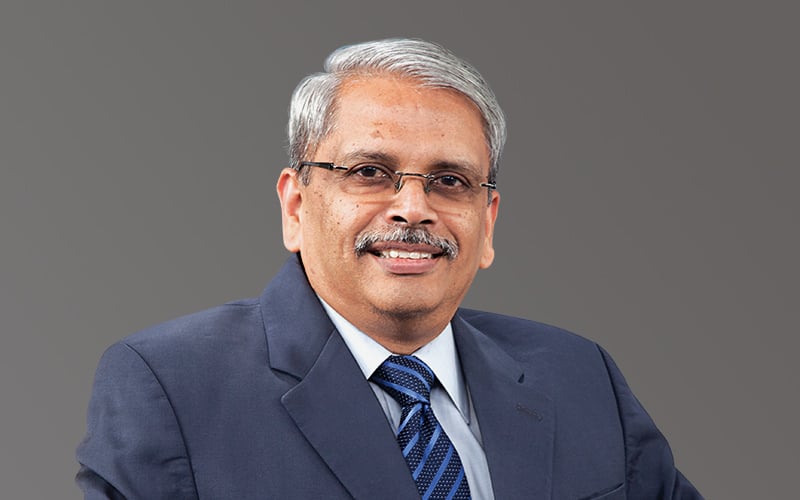
Kris Gopalakrishnan
krisgopalakrishnan
infosys
-3.jpg?width=259&height=194&name=images%20(5)-3.jpg)

Among the architects of modern India's technology revolution, few figures command the respect and admiration that Kris Gopalakrishnan has earned through decades of extraordinary achievement. His odyssey from humble origins to establishing one of the planet's most admired technology corporations, and subsequently to becoming a leading voice for India's artificial intelligence ambitions, offers profound lessons in leadership, innovation, and purposeful impact. This narrative explores a visionary whose contributions continue reshaping not merely enterprises, but an entire nation's trajectory.
Christened Senapathy Gopalakrishnan, Kris Gopalakrishnan emerged from a middle-class Indian household during an era when the nation was still establishing its identity following independence. His formative education provided the groundwork for an exceptional trajectory in technology and entrepreneurship. Armed with an electrical engineering degree and genuine enthusiasm for computing, he launched a journey that would ultimately assist in transforming India's economic landscape.
What distinguished Kris Gopalakrishnan from contemporaries wasn't merely technical brilliance but an extraordinary fusion of technical mastery, business intelligence, and steadfast confidence in India's capabilities. While numerous talented Indians from his generation pursued opportunities internationally, he opted to remain and construct something significant domestically—a choice proving consequential not just personally, but for countless Indians.
In 1981, seven engineers including Kris Gopalakrishnan united around a collective vision: constructing a world-class technology enterprise from India. With merely $250 borrowed from spouses and operating from a modest Pune room, they established Infosys Technologies. Obstacles were formidable—India's IT infrastructure remained primitive, international communications proved expensive and unreliable, and global clients harbored skepticism about Indian capabilities.
Nevertheless, Kris Gopalakrishnan and fellow co-founders demonstrated persistence. They implemented rigorous quality protocols, invested substantially in training, and cultivated a reputation for reliability and excellence. Infosys transcended mere IT services provision—it pioneered the Global Delivery Model, proving that sophisticated technology work could be delivered from India with world-class standards. This innovation fundamentally altered global perceptions of Indian capabilities and catalyzed India's IT services expansion.
When Kris Gopalakrishnan assumed Chief Executive Officer responsibilities in 2007, Infosys had already emerged as a substantial global entity. However, his CEO tenure, succeeded by his Vice Chairman role, witnessed the company navigating some of its most demanding and transformative periods.
Under his stewardship, Infosys broadened service portfolios, intensified global presence, and reinforced its position as a trusted collaborator to the world's largest corporations. Perhaps more significantly, Kris Gopalakrishnan helped institutionalize values becoming Infosys's signature—integrity, transparency, excellence, and profound commitment to stakeholder welfare. These weren't hollow corporate declarations; they were authentic values guiding decisions even when easier paths would have proven more profitable.
His leadership methodology combined strategic foresight with operational mastery. He comprehended technology profoundly but never overlooked business imperatives. He could engage in complex algorithm discussions with engineers and business strategy dialogues with board members with equivalent facility. This exceptional combination rendered him extraordinarily effective during a critical growth phase.
What separates Kris Gopalakrishnan from numerous technology leaders is his comprehensive understanding of innovation. For him, innovation wasn't confined to writing superior code or constructing faster systems—it concerned fundamentally reconceiving how technology could address human challenges.
This philosophy manifests in his persistent advocacy for what he terms "empathy-driven technology." While many technologists concentrate on what's technically feasible, Kris Gopalakrishnan questions what's humanly essential. This perspective has influenced his thinking regarding India's AI future—technology should serve humanity's requirements, particularly underserved populations' needs, not merely optimize for efficiency or profitability.
Among Kris Gopalakrishnan's most substantial contributions was refining and scaling the Global Delivery Model. This wasn't a minor operational modification—it represented a fundamental reconception of how technology services could be delivered. By demonstrating that complex work could be executed remotely with superior quality, Infosys created opportunities for millions of Indian engineers while saving clients billions of dollars.
Kris Gopalakrishnan recognized early that for Indian companies competing globally, they couldn't compete solely on cost—they had to compete on quality. Under his influence, Infosys became among the first companies globally achieving various quality certifications like SEI CMM Level 5. This quality and process excellence obsession became a differentiator helping Infosys secure and retain major global clients.
Beyond corporate accomplishments, Kris Gopalakrishnan has championed transforming India's education system passionately. He recognizes that India's demographic dividend—its large young population—constitutes an asset only if that population receives proper education and skills.
His student messaging remains consistent and powerful: embrace innovation, accept calculated risks, and don't fear failure. Speaking at convocation ceremonies and youth forums, he shares not just successes but failures, making him a relatable and inspiring figure for young Indians seeking their paths.
However, Kris Gopalakrishnan doesn't merely inspire—he invests. Through philanthropic endeavors, he has supported numerous educational institutions and initiatives targeting education quality improvement and fostering innovation and entrepreneurship. He understands that speeches alone won't transform education; it requires sustained investment and institutional construction.
Recently, Kris Gopalakrishnan has emerged as one of India's most thoughtful voices regarding artificial intelligence. His advocacy rests on a straightforward but powerful proposition: India's success in the AI era depends on research and development investment levels.
This isn't abstract theorizing. Kris Gopalakrishnan constructed his career in an industry where he witnessed firsthand the distinction between being a technology consumer and a technology creator. During the IT services expansion, Indian companies excelled at executing projects designed elsewhere. While this generated enormous value and employment, it left India dependent on technologies and platforms created in other nations.
The AI era presents an opportunity altering this dynamic. But capturing that opportunity requires fundamental shifts in how India approaches technology—from execution to innovation, from services to products, from cost leadership to innovation leadership. At this transformation's core, argues Kris Gopalakrishnan, must be sustained R&D investment.
The central message from Kris Gopalakrishnan is stark and urgent: India currently allocates less than 1% of GDP to R&D, substantially below innovative economies like South Korea (4.5%), Israel (5.4%), or the United States (3.5%). This chronic underinvestment carries consequences. Despite possessing enormous engineering talent, India generates relatively few patents, groundbreaking research publications, or foundational technologies.
For India succeeding in AI, this must change. Government must increase public research funding. Companies must transcend the low-margin services model to invest in product development and fundamental research. Universities must transform from teaching-focused institutions to research powerhouses. None of this will occur overnight, but without commencing now, India risks being marginalized in our time's most transformative technology revolution.
What renders Kris Gopalakrishnan's AI advocacy distinctive is his empathy emphasis. He envisions AI development addressing India's unique challenges—healthcare access in rural regions, educational equity, agricultural productivity for small farmers, efficient and transparent governance.
This isn't merely about constructing AI functioning in India; it's about constructing AI serving Indian needs and values. It's about ensuring that as AI transforms society, it reduces rather than intensifies inequalities. It's about technology empowering the marginalized rather than further advantaging the already privileged.
The philanthropic philosophy of Kris Gopalakrishnan reflects his systemic change understanding. Rather than traditional charity addressing immediate needs, his giving focuses on constructing long-term capabilities and institutions.
He has contributed significantly to educational institutions, research centers, and healthcare initiatives. These aren't vanity projects bearing his name; they're strategic investments in constructing the intellectual infrastructure India requires for its future. By funding research centers, endowing chairs, and supporting scholarships, Kris Gopalakrishnan helps construct the ecosystem producing the next innovator and leader generation.
His philanthropic approach recognizes that enduring change requires institution building, not merely check writing. It requires patient capital willing to invest in initiatives potentially taking years or decades showing results but can create transformative impact.
Even after withdrawing from day-to-day Infosys leadership, Kris Gopalakrishnan continues wielding substantial influence through various board positions and advisory roles. He serves on technology company boards, educational institutions, and policy organizations, applying his expertise and experience to critical decisions.
This continued engagement reflects profound responsibility. Kris Gopalakrishnan could have easily retired to leisured life, but instead, he remains actively engaged in shaping India's technology and innovation landscape. Whether advising startups, mentoring young entrepreneurs, or contributing to policy discussions, he continues investing his time and wisdom in constructing India's future.
The achievements of Kris Gopalakrishnan have garnered him recognition globally. He has received numerous awards and honors, served on prestigious international boards and committees, and been invited to speak at major global forums on technology and innovation.
But perhaps more significant than these accolades is his work's substantive impact. The Global Delivery Model pioneered at Infosys transformed the global IT industry. The emphasis on quality and process excellence elevated standards worldwide. Infosys's success inspired countless Indian entrepreneurs believing they too could construct world-class companies.
The advocacy of Kris Gopalakrishnan for R&D investment and innovation-led growth influences policy discussions in India. His vision for empathy-driven AI shapes how thought leaders consider technology's societal role. His example as entrepreneur, leader, and philanthropist provides a template for how business success can translate into societal impact.
The life and career of Kris Gopalakrishnan offers numerous lessons for aspiring entrepreneurs, business leaders, and anyone interested in meaningful impact:
Quality's Importance: Competing on quality rather than merely cost creates sustainable competitive advantage. The quality and excellence emphasis at Infosys under his leadership became a key differentiator.
Values Drive Success: Integrity, transparency, and stakeholder welfare aren't merely nice-to-have values—they're fundamental to constructing enduring institutions. The ethical foundation Kris Gopalakrishnan helped establish at Infosys has been crucial to its long-term success.
Long-term Thinking: Constructing anything meaningful requires time. The willingness to invest in capabilities, infrastructure, and people without immediate returns separates enduring companies from those that fade.
Innovation Requires Investment: Innovation doesn't occur accidentally. It requires dedicated R&D investment, willingness to experiment and fail, and patience to see long-term projects through.
Contributing Back: Success creates both opportunity and responsibility. Using wealth and influence to construct institutions and capabilities benefiting future generations is how successful individuals create lasting legacy.
Maintaining Relevance: Rather than resting on past achievements, continuing to learn, adapt, and engage with new challenges keeps leaders relevant and impactful across different career phases.
At this career stage, Kris Gopalakrishnan focuses on ensuring India capitalizes on the AI opportunity. He travels extensively, speaking at conferences, meeting policymakers, advising companies, and mentoring entrepreneurs. His message remains consistent: India possesses the talent and potential to be an AI leader, but only if it makes necessary investments and systemic changes.
The urgency in his message reflects understanding that opportunity windows don't remain open indefinitely. Other countries—China, the United States, European nations—are investing aggressively in AI. India possesses advantages, but those advantages won't automatically translate to leadership. It requires deliberate strategy, sustained investment, and collective effort across government, industry, and academia.
The work of Kris Gopalakrishnan continues because he believes profoundly in India's potential and feels responsible for helping realize that potential. Having performed a crucial role in India's IT revolution, he now wants to help ensure India leads the AI revolution. This isn't about personal legacy—it's about ensuring the next Indian generation has the opportunities and infrastructure to achieve their potential.
While Kris Gopalakrishnan has already achieved what most would consider a complete and successful career, his legacy continues evolving. The companies he helps construct, the students he inspires, the policies he influences, the institutions he supports—all of these will continue creating impact long after his active involvement concludes.
His story represents what's achievable when talent, diligence, vision, and values converge. From modest origins to co-founding a global technology icon, from corporate leadership to becoming a voice shaping national technology policy, from business success to philanthropic impact—it's a journey that inspires and instructs.
Perhaps the most significant aspect of his legacy will be the example he establishes: that business success and social impact aren't contradictory objectives but complementary ones, that leadership concerns serving others not merely commanding them, that innovation requires both technical expertise and human empathy, and that authentic success is measured not by wealth accumulated but by positive impact created.
The journey of Kris Gopalakrishnan from a middle-class background to co-founding Infosys, leading it through transformative growth, and now championing India's AI future represents more than merely a successful career—it represents a life lived purposefully and committed to creating lasting impact.
His influence extends far beyond the companies he constructed or the wealth he generated. He has shaped how India conceptualizes technology, inspired countless entrepreneurs to dream ambitiously and execute with excellence, influenced policy discussions on innovation and R&D, and demonstrated how business leaders can leverage their success for broader societal benefit.
As India stands at the AI era's threshold, voices like his—combining deep technical knowledge, proven business expertise, and genuine concern for societal impact—are more valuable than ever. The vision he articulates for India's AI future, grounded in empathy and powered by R&D investment, provides a roadmap that policymakers, business leaders, and entrepreneurs would benefit from following.
The story of Kris Gopalakrishnan reminds us that leadership transcends achieving personal success—it concerns enabling others' success, constructing institutions that outlast us, and leaving the world improved. By that measure, his has been—and continues being—a remarkably successful life.
Kris Gopalakrishnan, born Senapathy Gopalakrishnan, grew up in a middle-class Indian family during the post-independence period. He earned an electrical engineering degree and cultivated a computing passion during formative years. Unlike many talented Indians of his generation seeking opportunities abroad, he chose remaining in India to construct something meaningful domestically. This decision proved consequential not just for personal success but for millions of Indians who would benefit from the technology industry he helped create.
In 1981, seven engineers including Kris Gopalakrishnan founded Infosys Technologies with just $250 borrowed from spouses, operating from a small Pune room. Despite challenges like primitive IT infrastructure, expensive international communication, and skeptical global clients, they persevered by establishing rigorous quality processes and building reliability reputations. Kris Gopalakrishnan was instrumental in pioneering the Global Delivery Model, demonstrating that complex technology work could be delivered from India with world-class quality, fundamentally changing global perceptions of Indian capabilities.
As CEO from 2007 onwards and later as Vice Chairman, Kris Gopalakrishnan led Infosys during transformative years by combining strategic vision with operational excellence. His leadership institutionalized core values including integrity, transparency, excellence, and stakeholder welfare. He could discuss complex algorithms with engineers and business strategy with board members with equal facility. This rare combination of deep technical understanding and business acumen made him exceptionally effective during critical growth periods.
The Global Delivery Model, refined and scaled by Kris Gopalakrishnan at Infosys, was a fundamental reimagining of technology service delivery. It demonstrated that complex work could be executed remotely from India with high quality, opening opportunities for millions of Indian engineers while saving clients billions of dollars. This wasn't just an operational adjustment—it was an innovation that changed the global IT industry and became the foundation for India's IT services boom.
Empathy-driven technology, as advocated by Kris Gopalakrishnan, means innovation focused on fundamentally reimagining how technology can solve human problems, particularly for underserved populations. Rather than just optimizing for efficiency or profit, it asks what's humanly necessary. This philosophy shapes his AI advocacy—technology should serve humanity's needs, especially in areas like healthcare access in rural regions, educational equity, agricultural productivity for small farmers, and transparent governance.
Kris Gopalakrishnan's central message is that India's AI success depends directly on R&D investment. He argues that India currently spends less than 1% of GDP on R&D, far below innovative economies, resulting in fewer patents and foundational technologies despite enormous engineering talent. For India succeeding in AI, government must increase research funding, companies must invest in product development beyond low-margin services, and universities must transform into research powerhouses.
Beyond inspiring speeches at convocations and youth forums, Kris Gopalakrishnan invests substantially in educational transformation through philanthropy. He supports numerous educational institutions and initiatives aimed at improving education quality and fostering innovation and entrepreneurship. His approach focuses on building long-term institutional capabilities rather than addressing immediate needs, funding research centers, endowing academic positions, and supporting scholarships to help build the ecosystem producing the next generation of innovators.
Kris Gopalakrishnan's philanthropy focuses on systemic change rather than traditional charity. His giving targets building long-term capabilities and institutions through strategic investments in educational institutions, research centers, and healthcare initiatives. These aren't vanity projects but strategic investments in building intellectual infrastructure India needs for its future. His approach recognizes that lasting change requires building institutions and providing patient capital for initiatives that may take years or decades to show transformative results.
Key lessons include: competing on quality rather than cost alone creates sustainable advantage; values like integrity and transparency are fundamental to building enduring institutions; thinking long-term and investing in capabilities without immediate returns separates companies that endure from those that fail; innovation requires dedicated R&D investment and patience; using success to build institutions that benefit future generations creates lasting legacy; and staying engaged with new challenges keeps leaders relevant across career phases.
After stepping back from Infosys leadership, Kris Gopalakrishnan continues influencing through board positions with technology companies, educational institutions, and policy organizations. He advises startups, mentors young entrepreneurs, contributes to policy discussions, and speaks at conferences about AI and innovation. His continued engagement reflects deep responsibility to shape India's technology future, remaining actively involved rather than retiring to leisure.
His AI advocacy is distinctive because it combines proven experience building world-class technology companies with emphasis on empathy and human-centered development. He envisions AI addressing India's unique challenges—not just building AI that works in India but AI serving Indian needs and values, reducing inequalities rather than exacerbating them, and empowering the marginalized. This perspective, grounded in decades of technology leadership, carries particular weight in policy discussions.
His legacy includes co-founding and leading Infosys to global prominence, pioneering the Global Delivery Model that transformed the IT industry, inspiring countless entrepreneurs to build world-class companies from India, advocating for R&D investment and innovation-led growth influencing policy, demonstrating how business success translates to societal impact through philanthropy, and setting an example that business success and social impact are complementary. Most importantly, he shows that true success is measured by positive impact created, not just wealth accumulated.