-1.jpg?width=275&height=183&name=images%20(2)-1.jpg)
Kris Gopalakrishnan
krisgopalakrishnan
Kris Gopalakrishnan biography
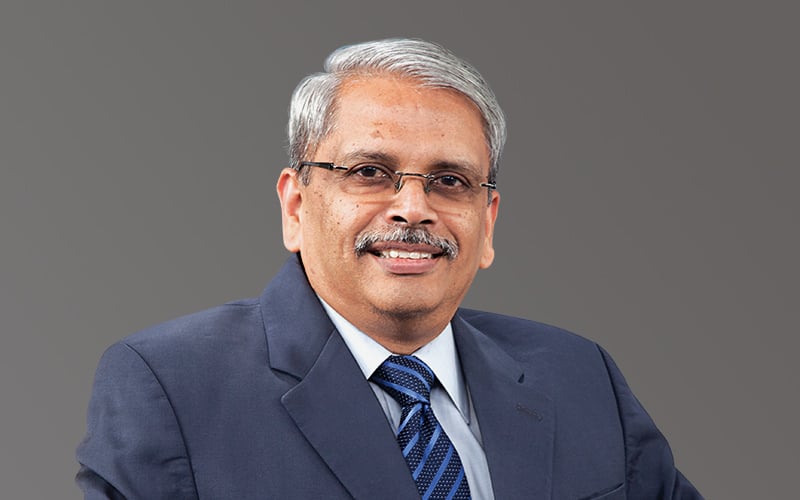
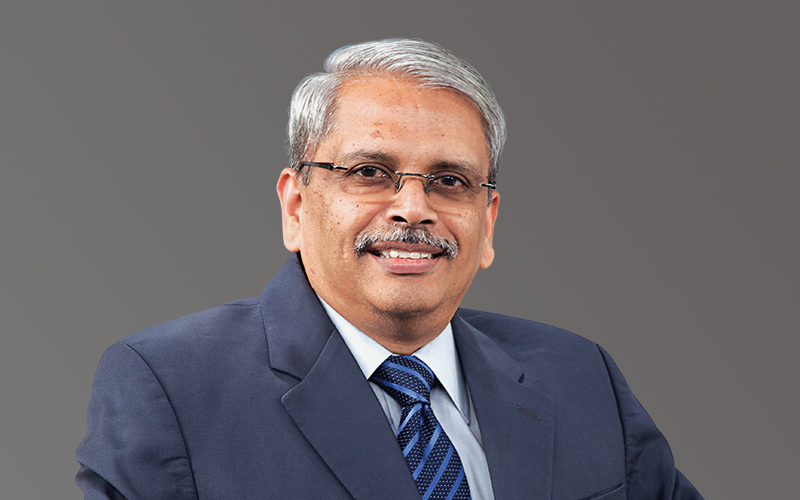
As India navigates the complexities of becoming an artificial intelligence superpower, one voice rises above the noise with clarity and authority. Kris Gopalakrishnan, whose fingerprints are on India's IT success story, now offers a blueprint for conquering the AI frontier. His transformation from Infosys architect to AI evangelist provides a masterclass in understanding technological revolutions and positioning nations for sustained competitive advantage.
The remarkable story of Kris Gopalakrishnan mirrors India's own technological awakening. In 1981, when seven visionaries pooled their resources to launch Infosys, they weren't just starting a company—they were igniting a movement. From modest beginnings in Pune with borrowed capital, this venture would blossom into a global technology leader employing hundreds of thousands and reshaping perceptions of Indian capability worldwide.
But the contributions of Kris Gopalakrishnan extend well beyond entrepreneurial success. His leadership tenure as CEO from 2007 through 2011, followed by his Vice Chairman role, witnessed Infosys navigating critical inflection points in technology, global markets, and organizational growth. His approach synthesized technical brilliance with strategic business thinking, establishing models for scaling technology enterprises while maintaining innovation culture and operational excellence.
The current AI advocacy from Kris Gopalakrishnan gains context from understanding India's IT revolution foundations. Companies like Infosys didn't just provide services—they fundamentally altered how the world viewed India's technological capabilities, transforming the nation from developing economy into technology powerhouse.
This metamorphosis wasn't chance—it required vision, execution precision, and navigating complex global relationships while building indigenous capabilities. The instrumental role played by Kris Gopalakrishnan in establishing processes, quality standards, and business models created industry benchmarks that endure today.
Yet he maintains that past achievements don't ensure future success. The IT services paradigm that enriched India through the 1990s and 2000s must evolve dramatically to capture AI opportunities and navigate emerging challenges.
The compelling vision articulated by Kris Gopalakrishnan addresses India's next technological quantum leap. Where the IT revolution established India as the world's execution powerhouse, the AI revolution offers pathways to become the world's innovation fountainhead.
This transition demands more than surface changes—it requires fundamentally reimagining India's approach to technology creation, talent development, and value generation. Rather than implementing projects conceived internationally, India must emerge as the wellspring of breakthrough innovations, fundamental research, and platform technologies that define AI's trajectory.
At the heart of what Kris Gopalakrishnan advocates is substantial research and development investment. India currently allocates approximately 0.7% of GDP to R&D—significantly below innovative economies worldwide. Without meaningful R&D spending increases, particularly in AI and related domains, India risks repeating its IT services pattern in artificial intelligence: deploying solutions designed abroad rather than creating them.
This difference proves fundamental. Nations and enterprises creating foundational AI technologies—algorithms, frameworks, and platforms others build upon—capture disproportionate economic value and strategic positioning. Those merely implementing these technologies remain perpetually reactive, competing primarily on cost rather than innovation leadership.
A defining characteristic of Kris Gopalakrishnan's philosophy involves emphasizing empathy in technology development. India must build technology models grounded in empathy—addressing genuine human needs rather than optimizing exclusively for efficiency or profitability.
This philosophy carries profound implications for AI development. Rather than simply importing AI technologies designed for Western contexts, India should invest in AI solutions addressing its distinctive challenges:
India's healthcare challenges—vast population, limited infrastructure, rural doctor shortages—represent both significant obstacles and opportunities for AI innovation. Developing AI-driven diagnostic tools, telemedicine platforms, and health advisory systems optimized for Indian conditions could serve domestic populations while creating exportable solutions for similar developing nations.
With millions of smallholder farmers, India's agricultural sector could benefit enormously from AI applications—spanning weather prediction and pest management to market intelligence and precision farming techniques. The emphasis Kris Gopalakrishnan places on empathy ensures these solutions remain accessible, affordable, and designed with actual users in mind, not merely as technology showcases.
AI-powered educational tools could tackle India's educational challenges—from fundamental literacy in remote areas to advanced skill development for emerging technologies. Technology can democratize quality education access, though only when developed with empathy for learners' diverse circumstances.
The vision Kris Gopalakrishnan articulates involves integrating innovation and entrepreneurship within universities. This transcends merely adding courses—it requires fundamentally reconceptualizing higher education's role in India's technological ecosystem.
Traditional Indian universities emphasized teaching, with research as secondary priority. What Kris Gopalakrishnan envisions involves universities as innovation engines where fundamental research addresses unsolved problems in AI and related fields, applied research tackles real-world challenges in Indian contexts, entrepreneurial ventures emerge from research labs commercializing innovations, industry partnerships ensure research relevance while funding academic endeavors, and talent development creates innovation-ready entrepreneurs rather than merely job-ready graduates.
When addressing students, Kris Gopalakrishnan encourages innovation and entrepreneurial thinking. His message extends beyond motivation—it provides actionable guidance including taking calculated risks rather than always choosing safe paths, solving genuine problems instead of building technology for its own sake, thinking long-term about creating lasting value rather than quick exits, building for India while maintaining global standards, and embracing failure as learning opportunity rather than stigma.
According to Kris Gopalakrishnan, private sector innovation alone proves insufficient—government policy plays crucial enabling or constraining roles. While AI awareness grows, awareness must translate into concrete actions.
Effective government policy for AI advancement includes funding mechanisms such as direct research grants, tax incentives for R&D spending, and subsidies for AI startups that stimulate private investment while supporting fundamental research potentially lacking immediate commercial viability.
Data infrastructure proves critical since AI requires data, yet India lacks comprehensive frameworks for data collection, sharing, and governance that balance innovation needs with privacy protection. Government databases covering health, agriculture, and demographics could fuel AI research if accessible under appropriate safeguards.
Regulatory clarity around AI development, deployment, and accountability provides confidence for long-term investment while protecting against potential risks. Educational investment spanning computational thinking in schools to funding doctoral AI programs creates talent pipelines necessary for sustained innovation. Government procurement policies favoring Indian AI solutions can create domestic market demand helping nascent companies achieve scale.
The partnership models Kris Gopalakrishnan champions unite government, academia, and industry. Successful international models demonstrate how public-private partnerships can accelerate innovation while ensuring research relevance.
Though building his career in private enterprise, Kris Gopalakrishnan holds companies accountable. Indian IT leaders have achieved remarkable success yet traditionally invested proportionally less in R&D compared to global technology pioneers.
The IT services model—while profitable—contains inherent innovation limitations. Companies focused on executing client projects possess limited bandwidth and incentives for long-term research. What Kris Gopalakrishnan recommends includes increased R&D budgets where Indian companies should commit substantially higher revenue percentages toward R&D even impacting short-term profitability, product development moving from pure services to product companies creating intellectual property and platform technologies, fundamental research investing in research potentially lacking immediate applications but building long-term competitive advantages, and academic partnerships funding university research while creating pathways from academic research to commercial application.
The recognition by Kris Gopalakrishnan acknowledges that established companies aren't sole innovation drivers. Startups contribute agility, risk-taking capability, and fresh perspectives. However, AI startups encounter unique obstacles including long development cycles before market readiness, high capital requirements for computing infrastructure and talent, uncertain commercialization paths as markets remain emerging, and competition from well-funded global players.
Addressing these obstacles requires patient capital, mentorship from experienced entrepreneurs, and ecosystem support from accelerators, universities, and government programs.
The journey Kris Gopalakrishnan undertook building Infosys offers pragmatic insights for contemporary AI entrepreneurs and policymakers.
From inception, Infosys emphasized quality—adopting rigorous processes, pursuing certifications, and building reputation for excellence. In the AI era, this translates to ethical AI development ensuring fairness, transparency, and accountability, robust testing before deployment in critical applications, continuous improvement as AI systems learn and evolve, and global standards even when serving Indian markets.
Infosys made decisions optimizing for long-term value creation rather than short-term gains—investing in training, infrastructure, and capabilities even when not immediately profitable. Similarly, AI development requires patience, accepting that breakthrough innovations demand time.
Infosys maintained strong values around integrity, transparency, and stakeholder welfare. As AI becomes more powerful and pervasive, values-centered leadership becomes critical—ensuring technology serves society rather than exploiting vulnerabilities or exacerbating inequalities.
While focused on India's advancement, Kris Gopalakrishnan maintains global perspective. India's AI journey unfolds within global context of rapid technological change, geopolitical competition, and shared challenges.
India must simultaneously collaborate and compete internationally. Collaboration with leading research institutions, technology companies, and international organizations can accelerate learning and address shared challenges. Competition drives innovation and ensures India doesn't lag in critical technologies.
India's AI innovations—particularly those addressing challenges common to developing nations—position India as technology leader for the Global South. Solutions developed for Indian contexts around affordable healthcare, multilingual education, and smallholder agriculture can adapt to other developing nations, creating export opportunities while advancing global development goals.
As AI raises ethical questions globally, India has opportunities to lead in developing frameworks for responsible AI—drawing on philosophical traditions emphasizing collective welfare alongside Western ethical frameworks.
Beyond business and policy advocacy, the philanthropic endeavors of Kris Gopalakrishnan demonstrate commitment to leveraging wealth and influence for social benefit. His giving concentrates on education, healthcare, and basic research—areas where patient capital creates lasting impact.
Rather than conventional charity, transformative philanthropy involves making significant commitments to institutions and causes where funding can catalyze change including educational institutions developing new models for innovation-focused education, research centers pursuing fundamental questions in science and technology, healthcare initiatives improving access for underserved populations, and arts and culture preserving heritage while embracing innovation.
This approach recognizes that sustainable change requires building institutions and capabilities, not just providing services.
While optimistic about India's potential, Kris Gopalakrishnan recognizes substantial obstacles including talent retention where India continues losing top talent to foreign opportunities, creating opportunities for cutting-edge work and competitive compensation that retain talent domestically remains challenging.
Infrastructure gaps spanning computing infrastructure to research facilities to reliable connectivity constrain innovation. Addressing these requires massive sustained investment. Cultural barriers exist where moving from service-oriented to innovation-focused culture requires changing mindsets at all levels. Implementation challenges persist where even sound policies often fail in implementation through bureaucratic delays and lack of coordination.
Synthesizing insights from Kris Gopalakrishnan across multiple forums, a strategic roadmap emerges:
Dramatically increase R&D funding with specific AI allocations, establish AI Centers of Excellence at premier universities and research institutions, launch national AI challenges with substantial prizes for solving priority problems, create fast-track visa programs attracting global AI talent to India, and develop AI curriculum spanning school through university levels.
Achieve measurable increases in AI patents and publications from Indian institutions, launch successful AI products from Indian companies serving domestic and global markets, build computing infrastructure reducing foreign cloud dependence, establish India as hub for AI research conferences and collaboration, and create regulatory frameworks for AI development and deployment.
Position India among top five nations in AI innovation and commercialization, develop breakthrough AI technologies becoming global standards, create thriving AI startup ecosystem with multiple unicorns, establish India as leader in ethical AI and responsible innovation, and generate significant AI-driven economic value across sectors.
The stakes in succeeding with AI extend beyond technology. AI will fundamentally reshape economies, labor markets, social structures, and power dynamics globally. Nations and companies leading in AI will enjoy disproportionate economic and strategic advantages.
For India specifically, economic opportunity exists where AI could add trillions to India's economy over the next decade, though only if India creates and captures value rather than merely consuming AI products. Social development through AI applications in healthcare, education, agriculture, and governance could accelerate development goal progress, improving lives for hundreds of millions. Geopolitical standing would elevate through AI leadership from regional power to technology superpower. Youth employment opportunities arise as AI innovation creates high-value jobs for India's young, educated population—though only if the ecosystem supports AI entrepreneurship and research.
The ongoing influence of Kris Gopalakrishnan on India's technology trajectory flows through multiple channels including board positions serving on boards of technology companies, educational institutions, and policy organizations influencing strategy and resource allocation.
Mentorship involves advising entrepreneurs, researchers, and policymakers navigating complex technology development and deployment decisions. Public advocacy includes speaking at conferences, contributing to policy discussions, and leveraging his platform advocating for increased innovation investment. Philanthropic investment directs his resources toward institutions and initiatives aligned with his vision for India's technological future.
For those building AI ventures in India, the journey and advocacy of Kris Gopalakrishnan offer several lessons including thinking long-term where building breakthrough innovations takes time, avoiding chasing quick exits at lasting value creation's expense.
Focusing on real problems recognizes technology for technology's sake rarely creates value, so concentrate on solving genuine problems for actual users. Maintaining high standards involves competing on quality and innovation, not just cost, building companies succeeding anywhere, not just in protected domestic markets.
Building for scale even when starting small means architecting solutions scaling to serve millions or billions. Staying values-driven acknowledges success built on unethical practices or exploitation proves unsustainable, so build companies inspiring pride. Embracing collaboration recognizes innovation rarely happens in isolation, so build partnerships with researchers, other companies, and even competitors where interests align.
The influence of Kris Gopalakrishnan extends globally. His perspective matters not just for India but for understanding how emerging economies can navigate technological disruption while advancing development goals.
The challenges India faces—building AI capabilities while addressing basic development needs, attracting talent while competing with wealthier nations, fostering innovation while ensuring equitable access—mirror challenges across the developing world. Solutions working for India could provide templates for other nations.
The authoritative voice of Kris Gopalakrishnan in technology policy stems from decades of building, leading, and reflecting on India's technological transformation. His current advocacy for AI-driven innovation grounded in empathy, powered by R&D investment, and focused on genuine societal needs offers compelling vision for India's future.
This vision isn't merely aspirational—it's achievable. India possesses talent, market size, and entrepreneurial energy necessary for AI leadership. What's required is strategic focus, sustained investment, and willingness to think beyond incremental improvements toward transformative change.
The IT revolution demonstrated what India could achieve when technology-focused. The AI revolution offers even greater possibilities—not just wealth creation but addressing fundamental challenges in healthcare, education, agriculture, and governance. Realizing this potential requires heeding experienced voices—combining wisdom of experience with vision to imagine radically better futures.
For entrepreneurs, policymakers, educators, and anyone invested in India's future, the message proves clear: decisions made today about AI investment, education, and innovation policy will reverberate for generations. India can lead in AI or observe from sidelines. The choice, and the opportunity, is now.
Those interested in exploring further can access resources through Kris Gopalakrishnan video content featuring speeches and interviews, professional profile and achievements at Kris Gopalakrishnan presentation materials on innovation, and official portfolio of initiatives from Kris Gopalakrishnan.
The fundamental message emphasizes dramatically increasing R&D investment in artificial intelligence to transition from consuming AI technologies to creating them. The focus involves building AI solutions rooted in empathy addressing India's unique challenges while maintaining global quality standards. Without this shift, India risks replicating its IT services role in the AI era—implementing solutions designed elsewhere rather than leading innovation.
Having co-founded and led Infosys through India's IT revolution, experience demonstrated genuine technological leadership requires owning intellectual property, conducting fundamental research, and creating platforms others build upon—not just executing projects efficiently. This understanding drives advocacy for R&D investment and innovation-focused education.
Empathy-driven technology means developing AI solutions genuinely addressing human needs rather than optimizing purely for efficiency or profit. For India, this means creating AI applications for affordable healthcare, accessible education, smallholder agriculture, and inclusive governance—designed with actual users' circumstances in mind. It emphasizes solving real problems for underserved populations rather than building technology showcases.
Universities are viewed as potential innovation engines, not just teaching institutions. Universities should conduct fundamental AI research, tackle applied problems in Indian contexts, foster entrepreneurial ventures, maintain industry partnerships, and develop innovation-ready graduates. This requires cultural shifts in how academic success is measured and substantial investment in research infrastructure and faculty.
Recommendations include dramatically increasing direct R&D funding, providing tax incentives for private sector research, establishing AI Centers of Excellence, developing clear data governance frameworks, creating procurement policies favoring Indian AI solutions, investing in AI education from schools through universities, and facilitating public-private research partnerships. Policy clarity around AI development and deployment proves crucial.
Indian technology companies should significantly increase R&D spending, move from pure services to product development, invest in fundamental research with long-term payoffs, create academic partnerships, and support the startup ecosystem through investment and mentorship. This requires accepting short-term profit impacts for long-term competitive positioning and transitioning from execution-focused to innovation-focused cultures.
Multiple challenges exist including talent migration to foreign opportunities, infrastructure gaps in computing and research facilities, cultural barriers in shifting from service to innovation mindsets, implementation challenges in translating policy to action, limited R&D funding compared to global leaders, and need for regulatory clarity around AI development and data usage.
Philanthropic work focuses on education, healthcare, and basic research—areas where patient capital creates transformative change. Rather than traditional charity, institutional giving builds capabilities and creates sustainable impact. This reflects understanding that lasting change requires strong institutions, not just services, aligning with vision of technology serving societal needs.
While IT services positioned India as execution specialist, AI offers opportunities to lead innovation and create foundational technologies. The difference proves crucial: IT services competed primarily on cost and execution quality, while AI leadership comes from creating breakthrough algorithms, platforms, and applications others depend on. This requires much higher R&D investment but offers greater value capture and strategic advantage.
Key lessons include focusing on quality and excellence over cost competition, thinking long-term rather than optimizing for short-term gains, maintaining strong values around integrity and transparency, investing in capabilities before they're immediately profitable, building for scale even when starting small, and recognizing sustainable success requires serving stakeholders broadly—not just maximizing shareholder returns.
India's AI solutions addressing challenges like affordable healthcare, multilingual education, and smallholder agriculture can adapt to other developing countries facing similar issues. This positions India as technology leader for the Global South, creates export markets for Indian AI companies, and advances global development goals. India can also lead in developing ethical AI frameworks relevant to developing country contexts.
Guidance suggests embracing innovation and entrepreneurship, taking calculated risks rather than always choosing safe paths, focusing on solving real problems rather than building technology for its own sake, thinking long-term about creating lasting value, building solutions for India while maintaining global standards, embracing failure as learning opportunity, and seeking education emphasizing innovation skills alongside technical knowledge.
-1.jpg?width=275&height=183&name=download%20(4)-1.jpg)