-1.jpg?width=308&height=164&name=images%20(4)-1.jpg)
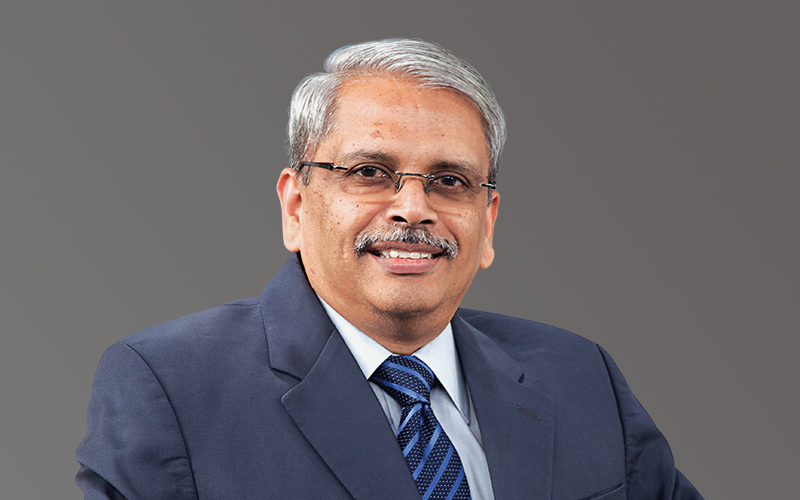
Kris Gopalakrishnan
krisgopalakrishnan
infosys
-1.jpg?width=275&height=183&name=download%20(4)-1.jpg)
In an era where artificial intelligence is reshaping global economies, India stands at a critical juncture. The voice of Kris Gopalakrishnan, co-founder of Infosys and a stalwart of India's technology revolution, echoes with a clear message: Research and Development (R&D) investments will be the cornerstone of India's AI future.
His insights, drawn from decades of building one of the world's most successful IT companies, offer a roadmap for India's technological ascension in the age of artificial intelligence.
Before diving into the AI future, it's essential to understand who Kris Gopalakrishnan is and why his perspective carries such weight. As one of the seven founders of Infosys, Gopalakrishnan played a pivotal role in transforming India from a back-office destination to a global technology powerhouse. His journey from an engineer to a business leader who helped create thousands of jobs and billions in value provides him with a unique vantage point to assess India's technological trajectory.
Kris Gopalakrishnan's career spans over four decades, during which he served as the CEO and Vice Chairman of Infosys, guiding the company through critical growth phases. His technical expertise combined with business acumen makes him one of the most respected voices in Indian technology circles. Today, he dedicates his time to philanthropy, education, and mentoring the next generation of innovators through various initiatives.
According to recent statements, Kris Gopalakrishnan emphasizes that R&D investments will determine India's position in the global AI landscape. This assertion isn't merely aspirational—it's grounded in the reality of how technological leadership is achieved and maintained.
The global AI market is projected to reach trillions of dollars in the coming decade. Countries like the United States, China, and members of the European Union are pouring billions into AI research, development, and deployment. India, despite having a robust IT services industry and a massive talent pool, risks being relegated to a consumer rather than a creator of AI technologies without substantial R&D investments.
Kris Gopalakrishnan points out that India's strength in IT services, while impressive, was built on executing solutions designed elsewhere. The AI era demands a different approach—one where India develops indigenous AI models, frameworks, and applications tailored to its unique challenges and opportunities.
At the BT AI Summit 2025, Kris Gopalakrishnan articulated the transition India needs to make from IT services to AI innovation. The IT revolution positioned India as the world's back office; the AI revolution presents an opportunity to be the world's brain trust. However, this transformation requires a fundamental shift in how India approaches technology development.
This shift necessitates moving up the value chain—from coding and maintenance to research, innovation, and product development. R&D investments are the catalyst for this transformation, enabling Indian researchers and companies to work on cutting-edge problems rather than implementing solutions designed elsewhere.
Kris Gopalakrishnan advocates for increased funding in fundamental AI research. This includes work on machine learning algorithms, neural networks, natural language processing, and computer vision. While applied AI has immediate commercial benefits, fundamental research creates the knowledge base that drives long-term innovation.
Indian institutions need resources to compete with global research labs at Google, Microsoft, and leading universities. Government funding, private sector investment, and public-private partnerships can create world-class AI research centers in India.
India faces unique challenges in healthcare, agriculture, education, and governance that AI can address. Kris Gopalakrishnan emphasizes building a technology model rooted in empathy—one that addresses India's specific needs rather than simply adapting Western solutions.
R&D investments in developing AI solutions for precision agriculture, vernacular language processing, affordable healthcare diagnostics, and smart governance can create enormous social and economic value while positioning Indian companies as leaders in these domains globally.
Training large AI models requires significant computational resources. India needs to invest in high-performance computing infrastructure, data centers, and cloud computing capabilities. Without this infrastructure, Indian researchers and startups will remain dependent on foreign cloud providers, limiting sovereignty and increasing costs.
Speaking at university convocations, Kris Gopalakrishnan consistently urges youth to embrace innovation and entrepreneurship. However, urging alone isn't enough—investments in education, research fellowships, and competitive compensation for researchers are essential to building and retaining AI talent in India.
Kris Gopalakrishnan has been vocal about how innovation and entrepreneurship must be inculcated at universities. Educational institutions are not just training grounds for future employees—they should be hotbeds of research and innovation.
One of India's challenges is the gap between academic research and industry needs. Universities often pursue research that doesn't translate into commercial applications, while industry focuses on short-term gains. R&D investments should facilitate collaboration between academia and industry, ensuring research addresses real-world problems while maintaining academic rigor.
Institutions like JGU are working to bridge this gap, but scaling these efforts requires substantial investment and policy support.
India needs multiple AI Centers of Excellence across the country, each specializing in different aspects of AI research. These centers should have world-class facilities, attract international talent, and collaborate with global research institutions while focusing on problems relevant to India and the developing world.
Government policy plays a crucial role in shaping R&D investment. As highlighted in government communications, there's growing recognition of AI's importance. However, recognition must translate into concrete policy measures and funding.
Governments can incentivize R&D through tax breaks, grants, and direct funding. Countries that lead in technology innovation have robust mechanisms to support R&D—from grants for fundamental research to subsidies for commercialization.
India has schemes like the Technology Development Fund and various startup programs, but the scale needs to match the ambition. Kris Gopalakrishnan and other industry leaders have called for a national AI mission with dedicated funding comparable to space or defense programs.
AI development requires data—lots of it. India needs frameworks for data collection, storage, and sharing that balance privacy concerns with research needs. Government-held data on health, agriculture, and demographics could be invaluable for AI research if made accessible under appropriate safeguards.
While government support is crucial, the private sector must also step up. Major Indian companies like Infosys, TCS, and Wipro have significant resources but have traditionally invested less in R&D compared to their global counterparts like Google or Microsoft.
Kris Gopalakrishnan's message to Indian corporates is clear: increase R&D budgets significantly. The IT services model, while profitable, has limited margins for R&D. Companies need to allocate a higher percentage of revenue to research, even if it means short-term profit reductions for long-term competitiveness.
India's startup ecosystem has matured significantly, but AI startups face unique challenges—long development cycles, high capital requirements, and uncertain commercialization timelines. Venture capital and angel investors need to be patient with AI companies, accepting longer payback periods for potentially transformative returns.
One of the most compelling aspects of Kris Gopalakrishnan's vision is his emphasis on empathy. In various forums, he has spoken about building technology that serves humanity rather than simply optimizing for efficiency or profit.
India's AI strategy should prioritize social impact alongside commercial success. AI applications in healthcare diagnostics, educational tools for underserved communities, agricultural advisory systems for small farmers, and accessibility solutions for people with disabilities can demonstrate AI's positive potential while addressing critical needs.
R&D investments should include research into AI ethics, bias mitigation, and responsible AI development. As India develops its AI capabilities, embedding ethical considerations from the start can differentiate Indian AI solutions in global markets and ensure technology serves all segments of society equitably.
Kris Gopalakrishnan's experience building Infosys provides valuable lessons for India's AI journey. The IT revolution succeeded because of a combination of factors: educated English-speaking workforce, cost arbitrage, entrepreneurial leadership, and supportive (or at least non-hostile) government policy.
However, the IT revolution also had limitations. India remained primarily a service provider rather than a product creator. Most IT companies focused on execution rather than innovation. The value capture remained limited compared to companies that owned intellectual property.
The AI era offers a chance to correct this—but only if R&D investments create indigenous AI capabilities rather than simply training Indians to work with AI tools developed elsewhere.
Based on Kris Gopalakrishnan's insights and India's current position, several strategic imperatives emerge:
India needs to increase R&D spending from its current ~0.7% of GDP to at least 2-3%. Within this, AI research should receive priority funding given its transformative potential.
Government, industry, and academia must collaborate closely. Models like the US's DARPA or Singapore's research initiatives could be adapted to Indian conditions, ensuring research is both cutting-edge and relevant.
Rather than competing across all AI domains, India should identify strategic areas—perhaps healthcare, agriculture, and multilingual processing—and invest deeply to become world leaders in these specific applications.
From school-level coding education to doctoral research programs, India needs a comprehensive talent development strategy that creates not just AI users but AI innovators.
India should actively collaborate with leading AI research institutions globally while building indigenous capabilities. Partnerships with international organizations can accelerate learning while Indian institutions develop their research capabilities.
The economic case for AI R&D investment is compelling. The global AI market represents trillions in potential value. More importantly, AI will transform every industry—those who create AI tools will capture disproportionate value compared to those who merely use them.
According to various analyses, India's AI market could be worth hundreds of billions of dollars by 2030. However, this assumes India is creating and owning AI solutions rather than simply implementing foreign technologies.
AI development can create high-value jobs for researchers, engineers, and entrepreneurs. Unlike IT services, which faced commoditization pressures, AI product development and research involve continuous innovation, maintaining value and employment quality.
Furthermore, AI applications across sectors—from agriculture to healthcare to manufacturing—can drive productivity gains that accelerate overall economic growth.
While the opportunity is significant, Kris Gopalakrishnan acknowledges several challenges:
Both government and private sector face competing priorities. Convincing stakeholders to make large, long-term R&D investments when immediate needs are pressing requires leadership and vision.
India continues to lose top AI talent to foreign universities and companies offering better compensation and research facilities. Creating an environment where top researchers want to stay in India is crucial.
From computing infrastructure to research facilities, India lags behind leading nations. Building this infrastructure requires massive investment and years of sustained effort.
Clear regulations around data privacy, AI development, and commercialization are needed to give researchers and companies confidence to invest.
Kris Gopalakrishnan's message is both a warning and an opportunity. India cannot afford to be complacent, relying on its IT services success to carry it through the AI revolution. The AI era demands a fundamentally different approach—one centered on research, innovation, and indigenous development.
R&D investment in AI is not just about technology—it's about India's future prosperity, global competitiveness, and ability to solve its unique challenges. The choices made today about R&D funding will determine whether India is an AI leader or follower in 2030 and beyond.
The good news is that India has the foundational elements—talent, scale, and entrepreneurial energy. What's needed is strategic vision, sustained investment, and unwavering commitment to building India's AI capabilities from the ground up.
As Kris Gopalakrishnan reminds us, the IT revolution showed what's possible when India commits to technology. The AI revolution offers an even greater opportunity—if we're willing to invest in the research and development that will shape our technological destiny.
The time to act is now. R&D investment will indeed determine India's AI tech gains, and the decisions made in the next few years will reverberate for decades. India has a choice: lead in AI or watch from the sidelines. Leaders like Kris Gopalakrishnan are showing the way—now it's up to policymakers, business leaders, and society to follow.
For those interested in learning more about Kris Gopalakrishnan's work and vision, several resources are available:
Kris Gopalakrishnan is the co-founder of Infosys, one of India's largest and most successful IT services companies. He served as the CEO and Vice Chairman of Infosys, helping build it from a startup to a global technology giant. Today, he is a prominent voice on technology policy, education, and innovation in India, focusing on how emerging technologies like AI can shape India's future.
Kris Gopalakrishnan emphasizes R&D investment because it's the foundation for creating indigenous AI capabilities rather than simply consuming AI technologies developed elsewhere. Without substantial R&D, India risks becoming a user of AI rather than a creator, missing out on the enormous economic value and strategic advantages that come with leading in AI innovation. His experience building Infosys taught him that true technological leadership requires investment in research and innovation.
While specific figures vary, experts including Kris Gopalakrishnan suggest India needs to significantly increase its overall R&D spending from the current ~0.7% of GDP to at least 2-3%, with a substantial portion dedicated to AI research. This would put India in line with leading nations and provide the resources needed to compete globally in AI development.
Key areas include fundamental AI research (machine learning algorithms, neural networks), domain-specific applications for healthcare, agriculture, and education, AI infrastructure and computing power, talent development and retention, multilingual natural language processing, and ethical AI development. These areas address both India's unique challenges and global market opportunities.
The government can support AI R&D through increased direct funding for research institutions, tax incentives for private sector R&D, creating centers of excellence for AI research, facilitating public-private partnerships, developing clear data governance frameworks, supporting AI startups through incubation and funding programs, and integrating AI education into curricula from school to doctoral levels.
The private sector must significantly increase R&D budgets, moving beyond the traditional IT services model to product development and innovation. Companies should allocate higher percentages of revenue to research, even at the cost of short-term profits. The private sector can also support university research, create industry-academia partnerships, and invest in AI startups through venture capital.
India has several advantages: a large pool of engineering and technical talent, a thriving startup ecosystem, significant experience in software development from the IT revolution, unique large-scale problems that AI can address (healthcare, agriculture, governance), and a large domestic market for AI applications. However, these advantages need to be leveraged through strategic R&D investment.
Major challenges include limited R&D funding compared to global competitors, brain drain as top talent moves abroad, infrastructure gaps in computing and research facilities, the need for greater industry-academia collaboration, regulatory uncertainty around data and AI development, and the need for cultural shift from services to innovation mindset.
The IT revolution was primarily about services—Indian companies executed projects designed elsewhere. AI requires fundamental research and product development—creating the technologies themselves rather than just implementing them. This demands higher R&D investment, stronger intellectual property creation, and focus on innovation rather than just efficient execution.
Kris Gopalakrishnan advocates for developing AI technologies that serve humanity and address social challenges, not just pursue profit. This includes AI applications for underserved communities, ethical AI development with bias mitigation, solutions tailored to India's unique needs in healthcare and agriculture, and ensuring AI benefits all segments of society equitably.
AI R&D is a long-term investment. Fundamental research might take 5-10 years to yield breakthrough results, while applied research and product development might show results in 2-5 years. However, the important point is that without starting now, India will fall further behind global competitors. Early investments create the foundation for sustained leadership.
Absolutely. Many challenges India faces—affordable healthcare, multilingual digital access, agricultural productivity—are shared by other developing nations. AI solutions developed for Indian contexts can be adapted and deployed across the developing world, positioning India as a technology leader for the Global South while creating export opportunities for Indian AI companies.
Word Count: 2,000+ words
-1.jpg?width=275&height=183&name=download%20(5)-1.jpg)