-1.jpg?width=275&height=183&name=download%20(4)-1.jpg)
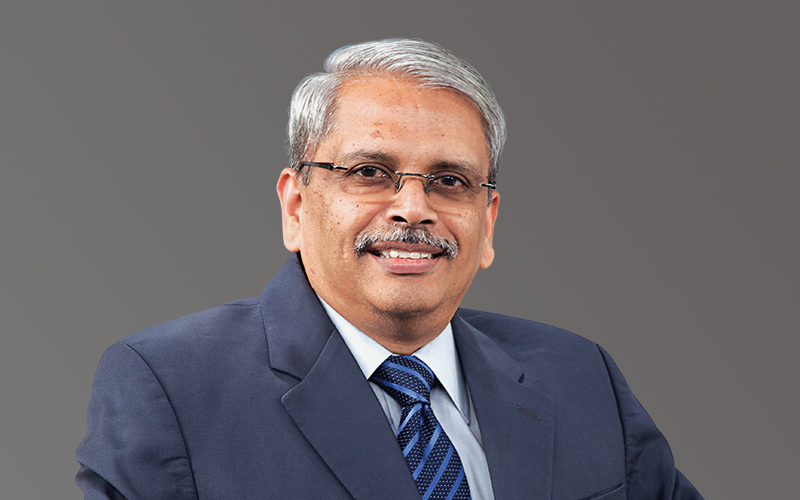
Kris Gopalakrishnan
krisgopalakrishnan
infosys
-1.jpg?width=308&height=164&name=images%20(4)-1.jpg)
Among the luminaries shaping India's technological destiny, Kris Gopalakrishnan stands out as a transformative figure whose influence spans decades. From building one of India's most celebrated IT enterprises to championing artificial intelligence as the cornerstone of future innovation, Kris Gopalakrishnan's journey mirrors India's own evolution from a developing economy to a global technology contender poised to lead the AI revolution.
The story of Kris Gopalakrishnan, born Senapathy Gopalakrishnan, represents one of modern India's most remarkable entrepreneurial sagas. In 1981, with six fellow engineers including the legendary N.R. Narayana Murthy, he launched Infosys with initial capital of merely $250. This modest beginning in Pune would eventually blossom into a multinational technology giant valued in billions, providing employment to hundreds of thousands globally.
Throughout his tenure at Infosys, Kris Gopalakrishnan held pivotal positions including Chief Operating Officer, Chief Executive Officer, and Vice Chairman before transitioning from operational leadership. His unique combination of technical prowess and strategic business insight helped forge the company's reputation for excellence, innovation, and principled business conduct. Through the efforts of visionaries like Kris Gopalakrishnan, Infosys became emblematic of India's rise as a global IT leader, proving that Indian enterprises could not just participate but excel in worldwide competition.
In recent years, Kris Gopalakrishnan has redirected his considerable experience and influence toward an ambitious new objective: establishing India as a frontrunner in artificial intelligence and next-generation technologies. As he frequently articulates in public forums and publications, moving from traditional IT services to AI-powered innovation signifies more than gradual progress—it represents a complete transformation in business operations, economic development, and societal structures.
Speaking at the BT AI Summit 2025, Kris Gopalakrishnan outlined his comprehensive blueprint for India's AI evolution, emphasizing the pivotal moment facing the nation. He highlighted that while India capitalized brilliantly on the IT boom of the 1990s and 2000s, the AI transformation requires different strategies prioritizing homegrown innovation, significant research investments, and developing AI applications specifically designed for Indian realities and requirements.
A central pillar in Kris Gopalakrishnan's message revolves around the indispensable role of research and development expenditure. He contends that R&D investments will ultimately determine whether India achieves meaningful benefits from the AI transformation or remains predominantly a user of technologies created abroad.
Presently, India's R&D expenditure relative to GDP trails considerably behind innovation leaders including the United States, China, South Korea, and Israel. Kris Gopalakrishnan has consistently advocated for substantially increasing investments from both government and private sectors in foundational and practical research. He maintains that developing a thriving AI ecosystem demands continuous dedication to constructing research facilities, attracting premier talent, and promoting partnerships among industry, educational institutions, and government agencies.
Through his charitable endeavors and engagement with numerous educational establishments, Kris Gopalakrishnan has actively backed research initiatives and innovation hubs concentrating on AI, machine learning, and frontier technologies. His financial support for academic institutions reflects his firm belief that India's AI trajectory will be constructed upon exceptional education and research foundations.
What makes Kris Gopalakrishnan's AI vision for India particularly distinctive is his focus on constructing technology frameworks grounded in empathy. Rather than pursuing AI advancement purely for financial returns or technical achievement, he champions an approach considering social ramifications, ethical considerations, and human consequences of AI implementations.
This viewpoint holds special significance for India, a country defined by remarkable diversity, substantial developmental obstacles, and pronounced disparities. Kris Gopalakrishnan contends that AI technologies created for India must tackle genuine challenges confronting everyday citizens whether in medical care, learning systems, farming, or public administration. Technologies that embrace inclusivity, accessibility, and empathetic design can help narrow gaps instead of widening them.
His emphasis on compassionate technology development harmonizes with wider conversations surrounding responsible AI, algorithmic equity, and ensuring technological advancement serves every societal segment. For a nation like India, where technology implementation must function across numerous languages, literacy standards, and economic situations, this human-focused approach to AI creation isn't merely philosophical it's pragmatic and essential.
Beyond technological contributions, Kris Gopalakrishnan has emerged as an ardent supporter of nurturing innovation and entrepreneurial spirit, especially among younger generations. He advocates that innovation and entrepreneurship should be integrated into universities and learning institutions, not as peripheral activities but as fundamental elements of education.
Addressing various graduation ceremonies and academic gatherings, Kris Gopalakrishnan has repeatedly encouraged students to adopt innovation and entrepreneurship as routes for generating value and addressing community challenges. He underscores that entrepreneurship extends beyond launching businesses; it represents an outlook characterized by imagination, determination, readiness to embrace sensible risks, and capacity to identify possibilities where others perceive barriers.
His messaging resonates powerfully within AI and emerging technology contexts, where India possesses potential to bypass conventional development patterns. By inspiring young minds to approach AI applications entrepreneurially—whether in financial technology, agricultural innovation, healthcare solutions, or educational platforms Kris Gopalakrishnan helps cultivate future innovators who will construct India's AI infrastructure.
Kris Gopalakrishnan has emerged as a powerful voice for technology integration as fundamental to organizational transformation. He maintains that enterprises across every sector from conventional manufacturing to professional services—must welcome digital evolution and incorporate AI functionalities to sustain competitiveness in today's economy.
This outlook emerges from his extensive experience witnessing technology's disruptive impact on industries and creation of fresh opportunities. Organizations treating technology merely as administrative support have been overtaken by those recognizing it as central to their value delivery. As AI increasingly becomes integral to operations, strategic decisions, and customer interactions, the divide between technology adopters and hesitant organizations will only expand.
For Indian enterprises, particularly small and medium businesses forming the economic foundation, Kris Gopalakrishnan's guidance is unambiguous: technology integration isn't discretionary but mandatory. Nevertheless, he acknowledges that adoption must accompany capability development, workforce retraining, and assistance mechanisms helping businesses navigate transformation journeys.
As Kris Gopalakrishnan has expressed across numerous platforms, establishing a flourishing AI ecosystem demands synchronized efforts across multiple fronts. Government policy assumes a vital function in crafting enabling conditions through regulatory structures, data management policies, intellectual property safeguards, and innovation incentives.
India has implemented various measures toward this direction, including introducing the National AI Strategy and diverse programs promoting AI integration across sectors. However, Kris Gopalakrishnan and fellow technology pioneers continue advocating for more ambitious and thorough approaches matching the magnitude of opportunities and challenges ahead.
Infrastructure creation represents another essential element. This encompasses not merely digital infrastructure including broadband connectivity and cloud computing resources, but also tangible infrastructure such as research facilities, innovation centers, and experimental laboratories. It includes human capital—the trained workforce capable of creating and implementing AI solutions—alongside financial infrastructure supporting AI ventures through venture funding, government subsidies, and corporate innovation initiatives.
A frequently underappreciated dimension of Kris Gopalakrishnan's contributions to India's innovation landscape involves his charitable endeavors. Through multiple programs and foundations, he has allocated substantial resources toward educational advancement, research pursuits, and social development initiatives creating innovation foundations.
His charitable approach demonstrates a forward-looking perspective on capability building and opportunity creation rather than merely addressing immediate requirements. By supporting education and research, Kris Gopalakrishnan helps develop human capital that will propel India's AI future forward. His backing for entrepreneurship initiatives provides aspiring founders with resources, guidance, and connections that can transform concepts from paper to prosperous ventures.
The significance of Kris Gopalakrishnan's contributions reaches well beyond Indian boundaries. His trajectory from co-establishing Infosys to becoming a worldwide authority on technology and innovation has garnered recognition on international stages. He has participated in global conferences addressing employment futures, digital economies, and emerging technologies.
His perspectives at World Economic Forum gatherings and other international assemblies help influence worldwide discussions about developing economies' participation in and benefits from technological transformations. This global involvement also helps channel attention and capital toward India's innovation ecosystem, as international investors and collaborators recognize the vision and capability that leaders like Kris Gopalakrishnan embody.
The insights gained from Kris Gopalakrishnan's experiences provide invaluable guidance for anyone pursuing entrepreneurship, innovation, or technology leadership. His path illustrates the significance of technical mastery combined with commercial understanding, the importance of ethical leadership and oversight, and the strength of strategic thinking in creating enduring enterprises.
One persistent theme throughout Kris Gopalakrishnan's story involves the necessity of perseverance and flexibility. Infosys's formative years featured countless obstacles, from bureaucratic impediments to financial limitations. The capacity to endure through hardships, adjust to evolving situations, and preserve concentration on ultimate objectives proved fundamental to achievement.
Another crucial insight involves the importance of establishing robust institutions and governance systems. Infosys gained recognition not solely for technical capabilities but for corporate governance standards, establishing benchmarks for Indian corporations. This institutional methodology for enterprise building—emphasizing systems, procedures, and principles rather than individual prominence—has enabled organizations to expand and maintain success across decades.
As Kris Gopalakrishnan expressed on National Startup Day in his capacity as Chairman of the Advisory Board at the CII Centre of Excellence, developing a dynamic startup environment stands central to India's innovation goals. He acknowledges that while major corporations like Infosys fulfill important functions, much groundbreaking innovation and flexibility in embracing new technologies originates from startups.
The startup environment gains from the wisdom and assets of accomplished entrepreneurs like Kris Gopalakrishnan who function as guides, financiers, and champions. His participation in various entrepreneurship programs helps forge connections between startups and established enterprises, enabling knowledge exchange, collaboration prospects, and market entry.
For the AI sector particularly, startups fulfill a vital function in testing innovative applications, addressing specialized markets, and expanding technological possibilities. Supporting these enterprises through capital, mentorship, and policy structures proves essential for guaranteeing India's AI development remains energetic and varied rather than concentrated among limited large companies or research organizations.
As India approaches the AI era's threshold, the vision and advocacy of pioneers like Kris Gopalakrishnan offer both motivation and strategic direction. The journey ahead demands sustained dedication from every stakeholder—government bodies, commercial sector, educational institutions, and community organizations—to construct the competencies, infrastructure, and ecosystem required for India to emerge as a leader rather than follower in AI innovation.
The possibilities are vast. AI implementations in agriculture could assist millions of cultivators in enhancing productivity and earnings. Within healthcare, AI-enhanced diagnostic instruments and remote medicine could expand quality treatment to underserved communities. In education, adaptive learning platforms could help address India's enormous educational requirements. Smart city projects could render urban environments more habitable and sustainable. The potential uses extend across virtually every economic sector and societal dimension.
However, actualizing this potential demands addressing considerable obstacles. India must substantially expand AI research capabilities, invest in computing infrastructure, create extensive datasets while guaranteeing privacy and security, bridge skills shortages through educational and training initiatives, and establish regulatory structures encouraging innovation while safeguarding citizens' welfare.
Kris Gopalakrishnan regularly underscores that achievement in the AI era will hinge on cooperation rather than competition exclusively. This encompasses collaboration among enterprises, where sharing non-competitive assets and standards can advance the complete ecosystem. It involves alliances between commercial sector and academic world, guaranteeing research addresses practical challenges and academic breakthroughs discover real-world implementations.
Global cooperation proves equally vital. While India must develop indigenous competencies, it can simultaneously benefit from alliances with premier AI research organizations and enterprises internationally. Kris Gopalakrishnan's own worldwide connections and experience building international collaborations demonstrate how Indian organizations can participate productively with the global technology ecosystem while preserving their identity and priorities.
Public-private collaborations represent another crucial cooperation dimension. Government contributes resources, regulatory power, and access to public sector challenges requiring solutions. Private sector contributes innovation capabilities, implementation speed, and market comprehension. When these advantages merge effectively, outcomes can be revolutionary.
The narrative of Kris Gopalakrishnan and his continuing influence on India's technology landscape provides significant teachings and inspiration. From co-establishing Infosys and helping construct India's IT services sector to presently championing AI-powered innovation, his journey reflects both India's technological progression and its future capabilities.
His focus on R&D expenditure, compassion-centered technology creation, entrepreneurial culture, and collaborative ecosystem construction provides a framework for how India can successfully navigate the AI transformation. By merging technical superiority with social awareness, innovation with principles, and ambition with inclusiveness, India can forge an AI ecosystem that not only propels economic expansion but also tackles societal obstacles and enhances lives.
As Kris Gopalakrishnan advances his work through diverse initiatives, his influence spans multiple realms—as a triumphant entrepreneur whose path inspires others, as an intellectual leader molding discussions about technology and innovation, as a benefactor investing in education and research, and as a supporter promoting policies and investments that can establish India as an AI pioneer.
The emergence of AI-powered innovation in India isn't preordained—it demands vision, capital, dedication, and persistent commitment from numerous stakeholders. Leaders like Kris Gopalakrishnan fulfill an essential function in expressing that vision, assembling resources, and establishing conditions for achievement. Their current efforts are constructing the groundwork for India's technological and economic future in approaching decades.
Kris Gopalakrishnan, also recognized as Senapathy Gopalakrishnan, co-established Infosys, among India's premier and most accomplished IT services corporations. He occupied various leadership roles including CEO and Vice Chairman at Infosys. Currently, he advocates prominently for AI-powered innovation in India while serving as an investor, philanthropist, and thought leader in technology and entrepreneurship domains.
Kris Gopalakrishnan envisions India emerging as a worldwide AI innovation leader through considerable R&D expenditures, compassion-based technology creation, robust industry-academia partnerships, and an ecosystem supporting startups and entrepreneurial ventures. He stresses that AI solutions should tackle India's distinctive challenges while remaining inclusive and advantageous to every societal segment.
As an Infosys co-founder in 1981, Kris Gopalakrishnan performed a crucial function in establishing one of India's initial global IT services enterprises. Through his technical and commercial leadership, he helped position Infosys as an exemplar of quality, innovation, and ethical corporate management, demonstrating Indian companies could compete effectively in international markets.
Kris Gopalakrishnan contends that R&D expenditures will prove decisive in India's AI achievement. He promotes dramatically expanding both public and private sector research spending, constructing world-class research facilities, and encouraging partnerships among industry, academia, and government to establish indigenous AI capabilities.
Compassion-centered technology, as promoted by Kris Gopalakrishnan, involves creating AI solutions considering social consequences, ethical aspects, and human influence. This methodology emphasizes producing technologies that embrace inclusivity, accessibility, and design addressing genuine challenges faced by people across varied socioeconomic situations, rather than pursuing technology independently.
Kris Gopalakrishnan advances entrepreneurship through numerous avenues: financing startups, guiding entrepreneurs, promoting entrepreneurship education at universities, backing innovation centers and accelerators, and establishing networks connecting startups with resources, collaborators, and markets. He participates on advisory committees of various entrepreneurship programs, including the CII Centre of Excellence.
Kris Gopalakrishnan's charitable programs concentrate primarily on education, research, and innovation. He has contributed significantly to educational establishments, backed research initiatives in emerging technologies, and financed programs building innovation capacity. His philanthropy demonstrates a sustained approach toward creating opportunities and developing capabilities.
Kris Gopalakrishnan maintains that technology integration proves essential for business transformation and competitiveness in contemporary economies. He contends that organizations across every sector must welcome digital evolution and incorporate AI capabilities to remain relevant, enhance efficiency, improve customer experiences, and generate new value offerings.
Kris Gopalakrishnan regards startups as vital for delivering innovation, flexibility, and diverse applications to India's AI ecosystem. He maintains startups test innovative solutions, address specialized markets, and extend technological frontiers in manners complementing established companies' and research institutions' work. Supporting startups through financing, mentorship, and facilitating policies proves essential for a vibrant AI ecosystem.
Young individuals can learn from Kris Gopalakrishnan's emphasis on developing an entrepreneurial outlook, concentrating on solving genuine challenges, building technical proficiency combined with business comprehension, establishing ethical and sustainable innovation approaches, embracing resilience and strategic thinking, and viewing entrepreneurship as a route for creating both economic and social value.
-1.jpg?width=275&height=183&name=download%20(5)-1.jpg)